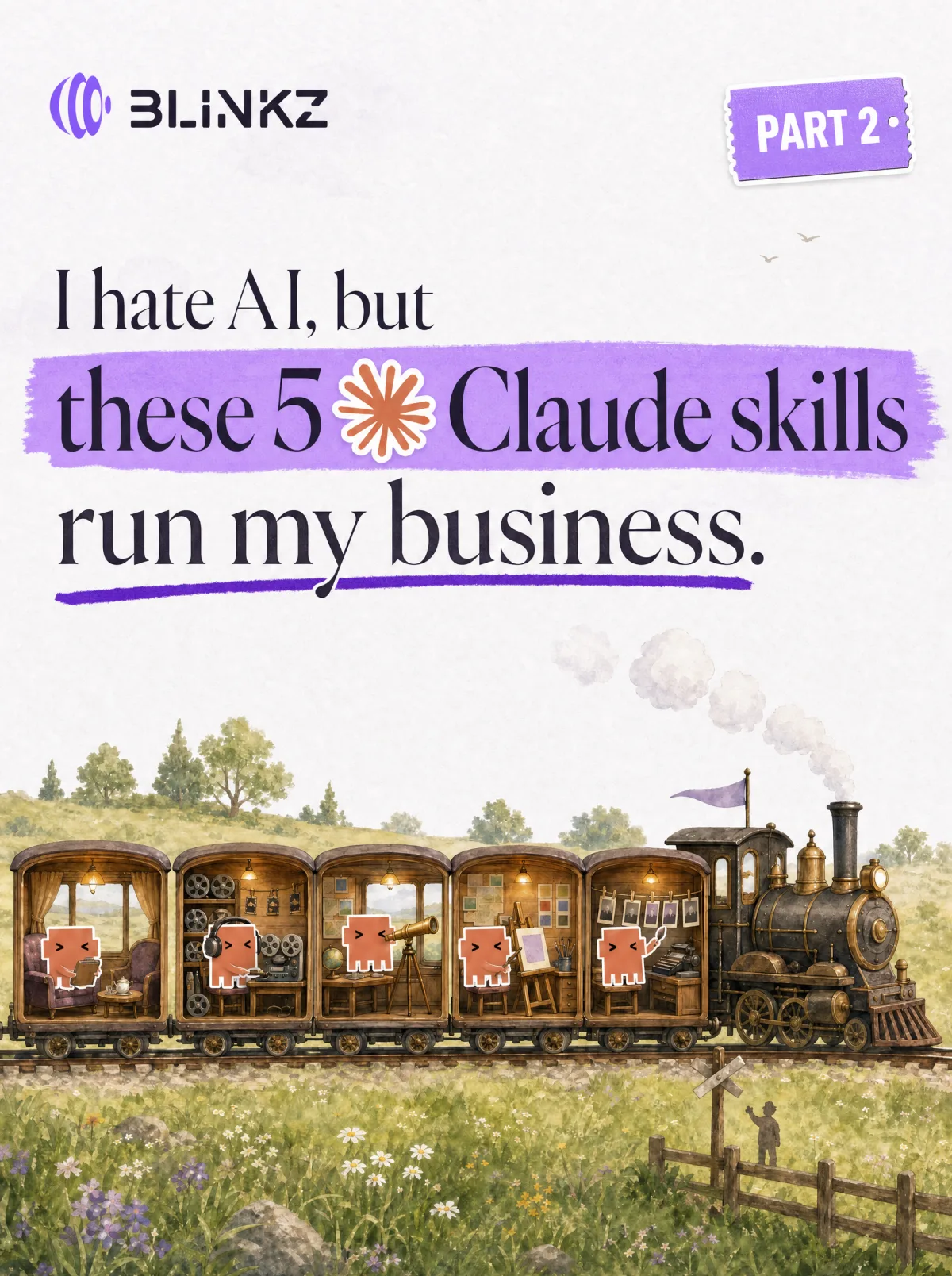
Part one covered the five Claude skills that keep Blinkz running: the Brain OS folder, the writing pack, the carousel factory, the deck skill, and the architect. Same rule applies to these five. A tool gets a seat when it does one narrow job well enough that we stop checking its work.
One of them found a hole in our own business, which is worth telling properly.
The one that interviews us
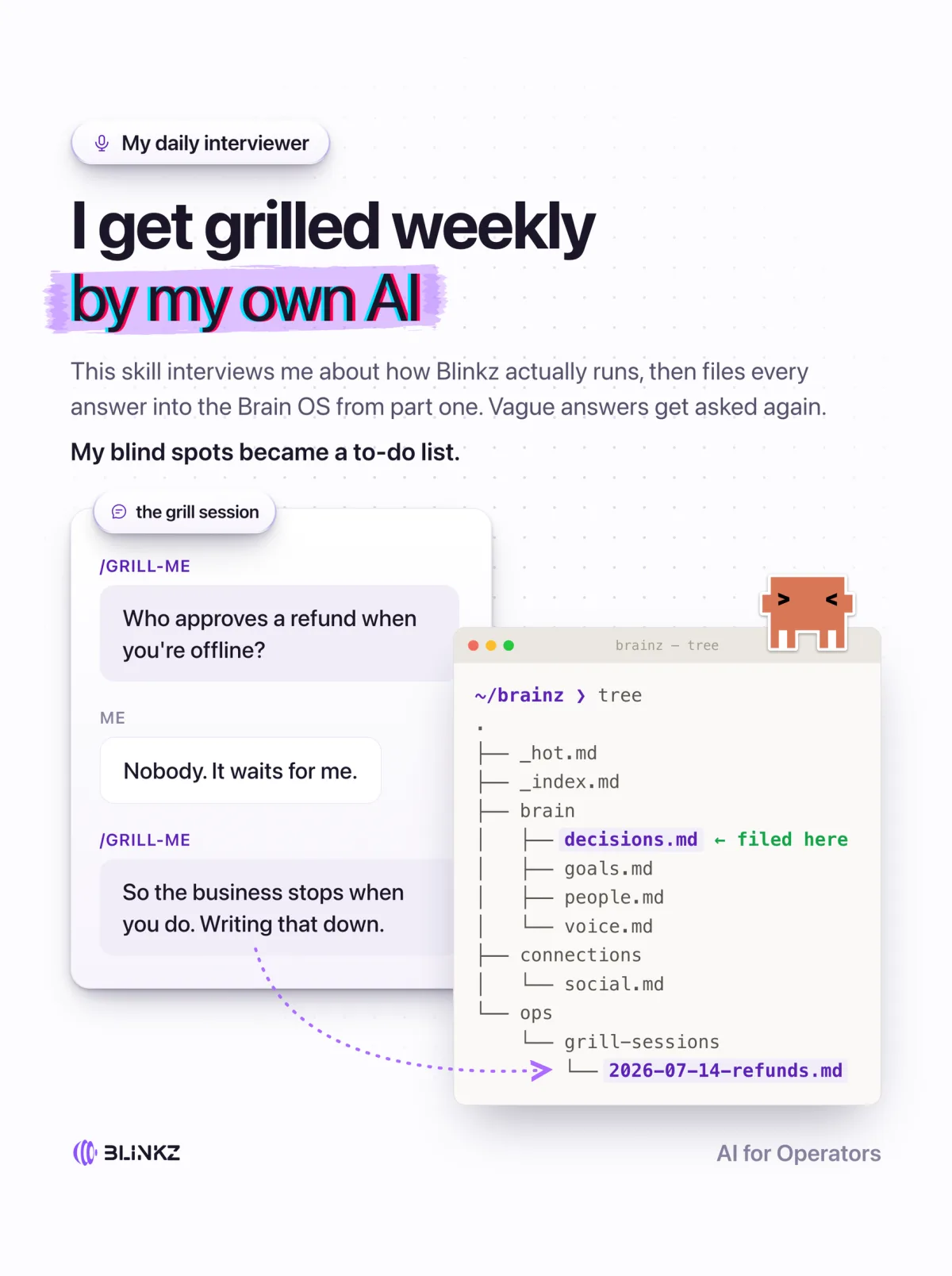
Every week, our own AI sits us down and asks questions about how the business runs. It is a skill whose entire job is to get what is in the founder's head into the brain files, one uncomfortable question at a time.
A few weeks ago it asked who approves a refund when the founder is offline.
Nobody did. Not "the process was unclear." There was no answer, because the situation had never come up in a way that forced one, and the business had quietly been relying on one person happening to be awake. That answer is now decision #3 in our brain files.
We audit other businesses for exactly this and we still had one. That is the point. This failure is invisible from the inside, because the person everything routes through is the same person who would have to notice it. It is the first thing on our free teardown, and it is why the questions have to come from outside.
The one that watches videos
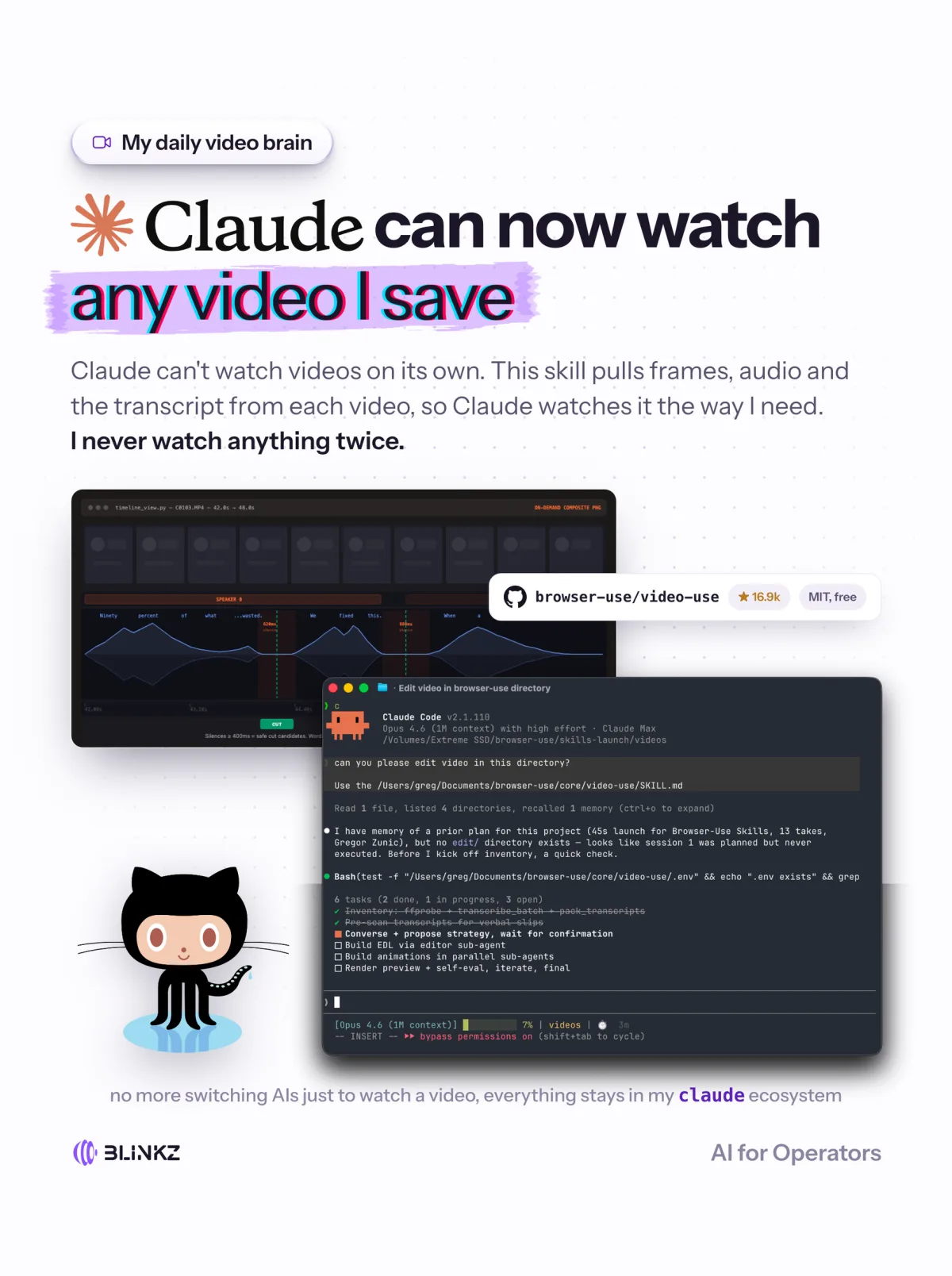
Claude cannot watch a video on its own. This open-source skill, sitting at around 16,900 stars, pulls the frames, the audio, and the transcript so it can.
The result is that we never watch anything twice. A long recording gets read once, properly, and what mattered ends up in notes we can search later. The habit it replaces is the one where you rewatch a call at 2x speed hoping to find the part you half remember.
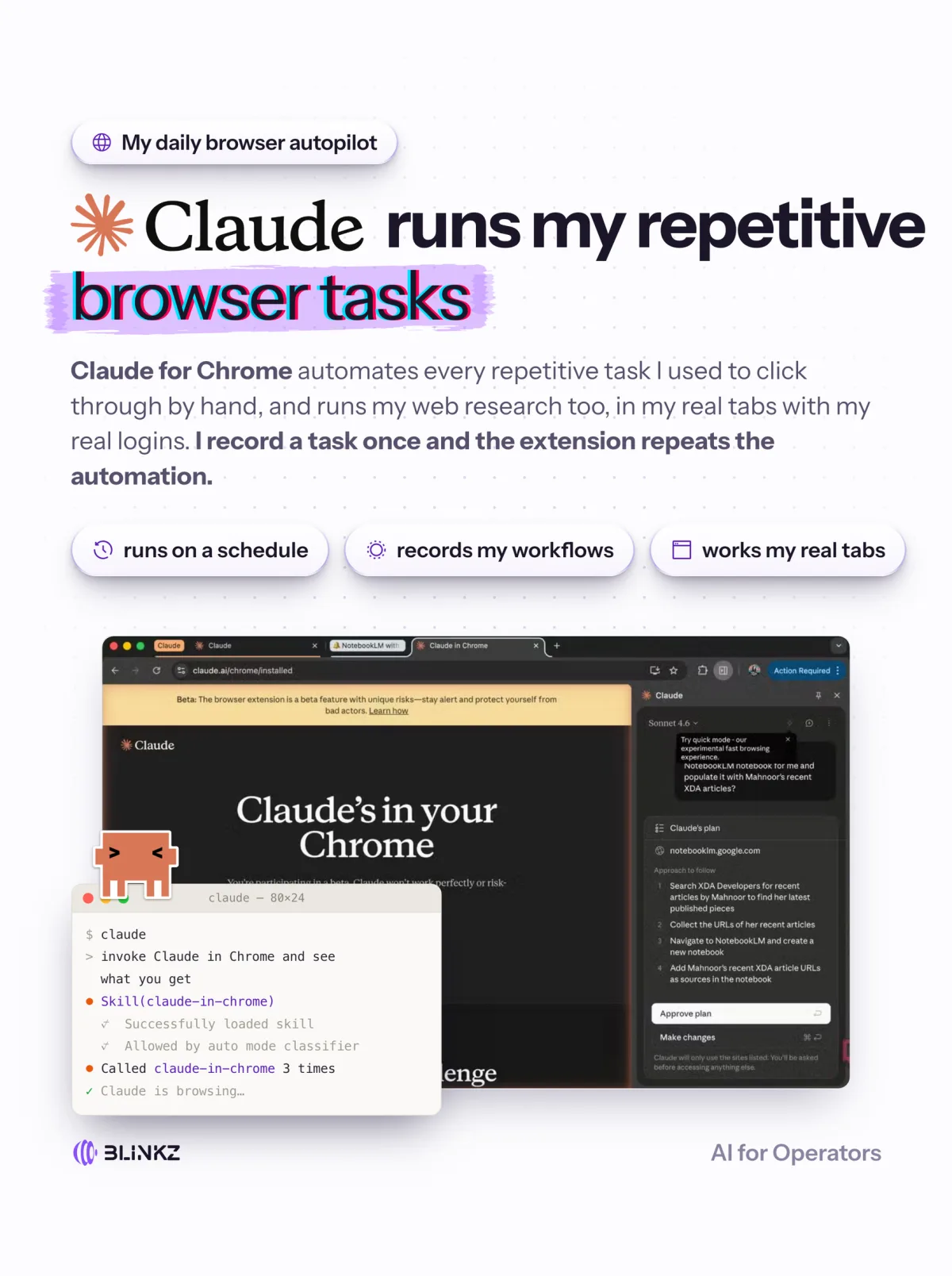
The one that drives the browser
We record a task once, in our real tabs with our real logins, and the extension repeats it on a schedule.
That last part is what makes it useful rather than a demo. Most browser automation breaks the moment it meets a real login wall or a session that expires. Recording it inside the browser we already use, already signed in, skips the entire category of problem that makes this stuff fragile.
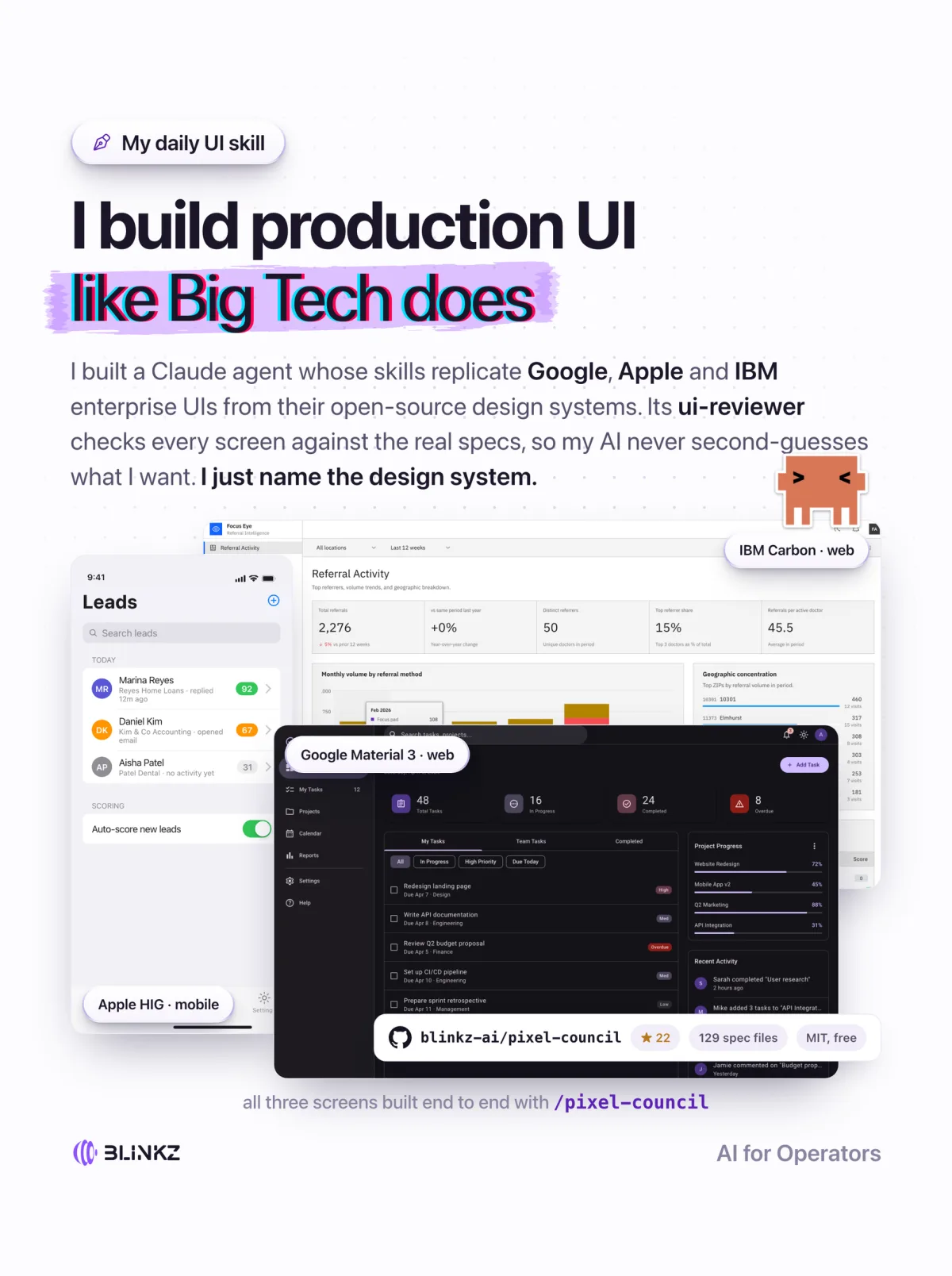
The one that knows the design systems
This one carries 129 spec files from Google, Apple, and IBM. We name the design system and Claude builds production UI against the real published specs.
The reason it earns its seat is narrow and boring: it stops the model guessing. Left alone, an AI will invent colors, miss half the interaction states, and hand you something that looks right in a screenshot and falls apart the moment someone tabs through it. Handing it the actual specs removes the guessing.
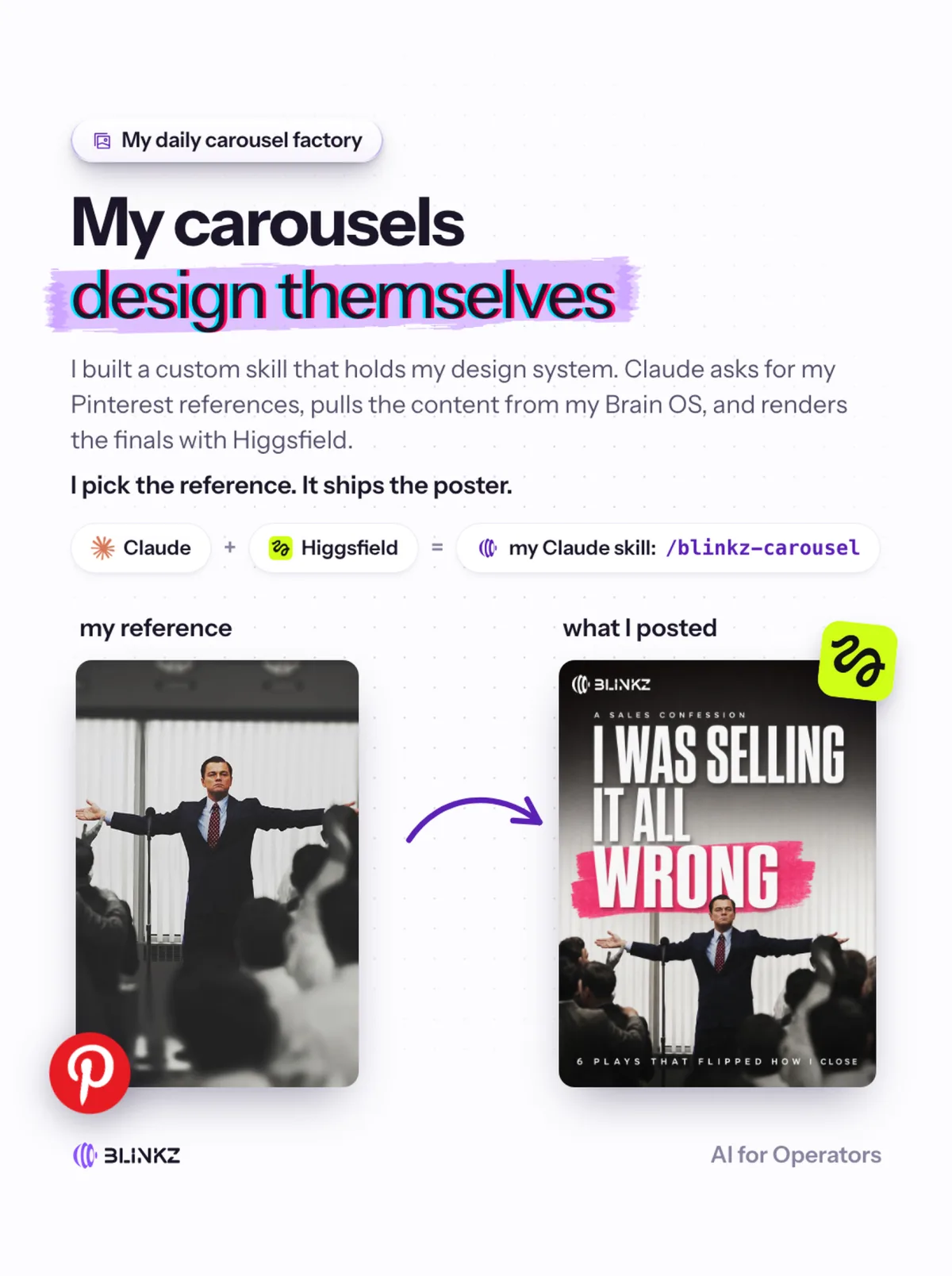
The one that came back
The carousel factory is straight from part one, and it kept its seat because it built this post too.
That is the honest test for any of this. Not whether a tool is impressive the week you find it, but whether it is still load-bearing a month later when the novelty is gone. Four of these five were new since part one. The factory is the only repeat, and it earned the repeat.
The rule, again
Every skill in both parts is narrow. None of them is a general assistant that does a little of everything and none of it reliably. That is the same standard we hold a business to when we look at where AI fits: one specific job, clear rules, reliability over range. We made that argument at length in where AI actually pays.
The folder that makes all ten of these work is the free Brain OS kit. If you would rather skip the tool list and find the one place AI would pay in your business, that is the free Health Check, and the systems we build follow the same rule these do.