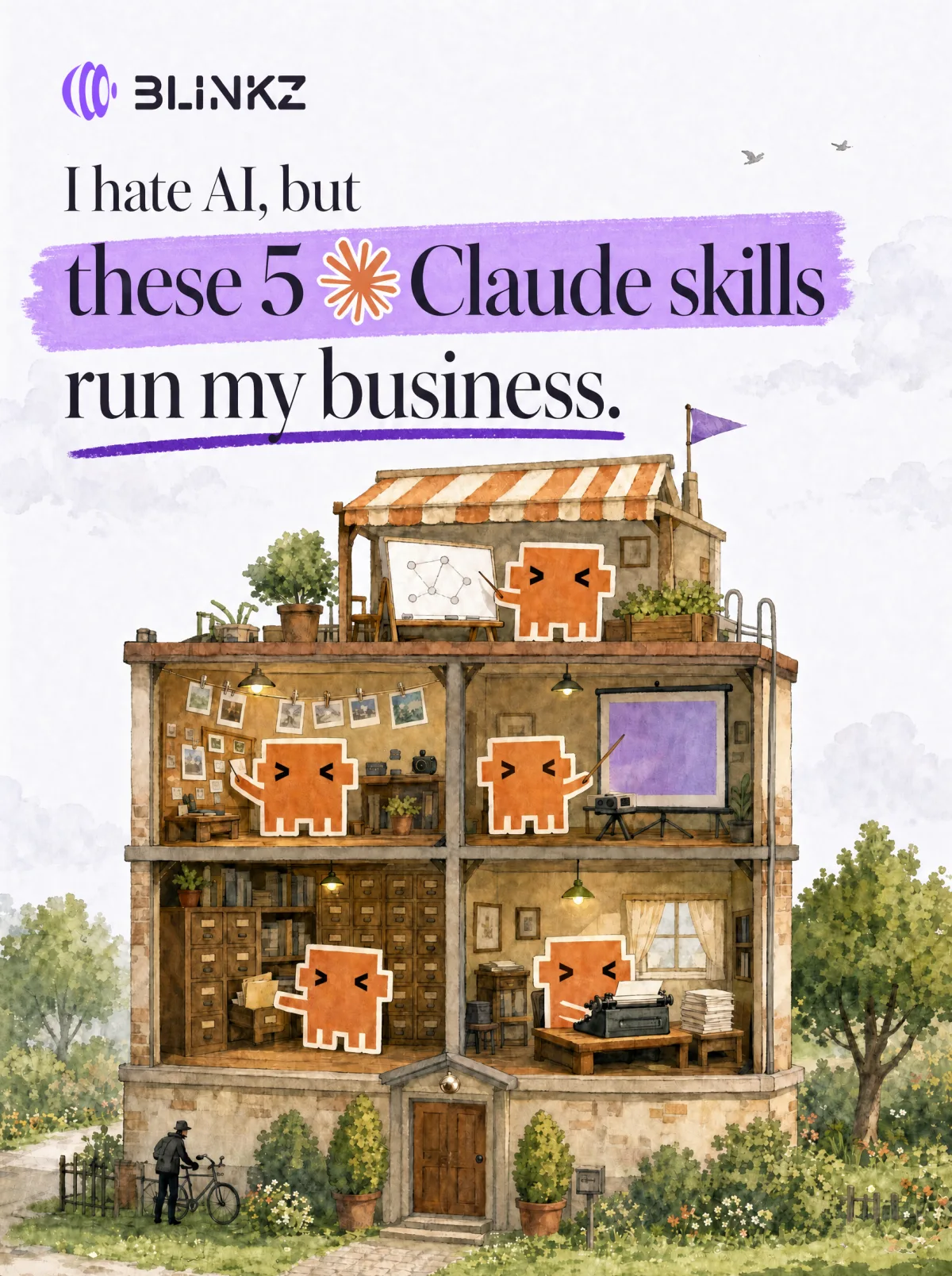
We spend most of our time telling operators where AI does not belong. Then we go back to our own desks and run Blinkz on five Claude skills, every day, with one operator and no team.
Both of those are true, and the same rule explains them. A tool gets a seat here once it does one specific job well enough that we stop checking its work. Everything else gets deleted, however good the demo was.
Here are the five that survived that test.

The Brain OS
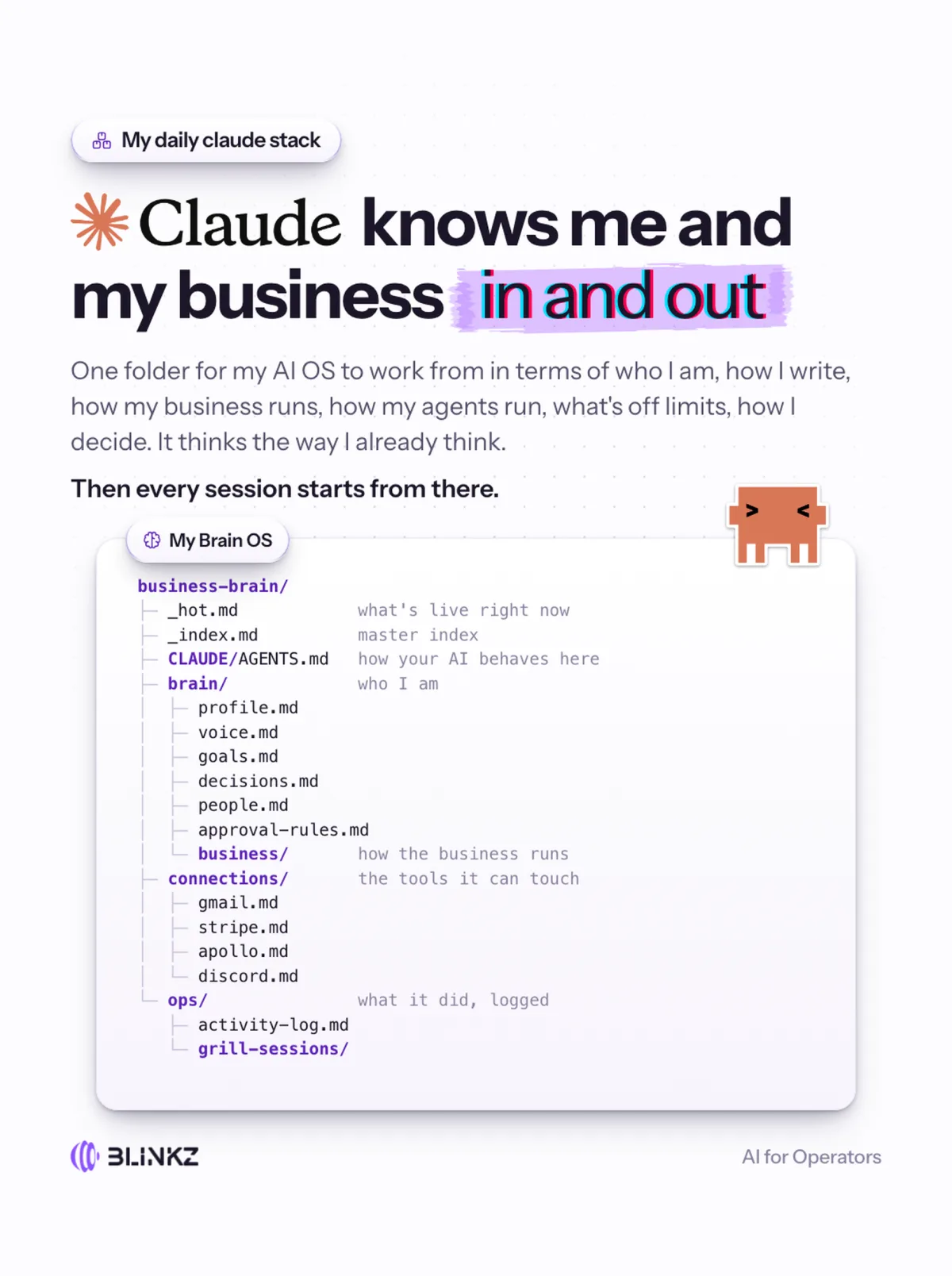
The first one is not clever. It is a folder.
Every AI tool opens each conversation knowing nothing about your business, so it guesses, and you spend the session correcting it. The Brain OS is a folder we set up once. It holds who we are, how we write, how the business actually runs, and what the AI is allowed to touch. Now every chat starts already knowing.
It is the least impressive thing in the stack and the reason the other four work at all. The starter version is free: the Brain OS kit is one folder, and it interviews you and fills itself in.
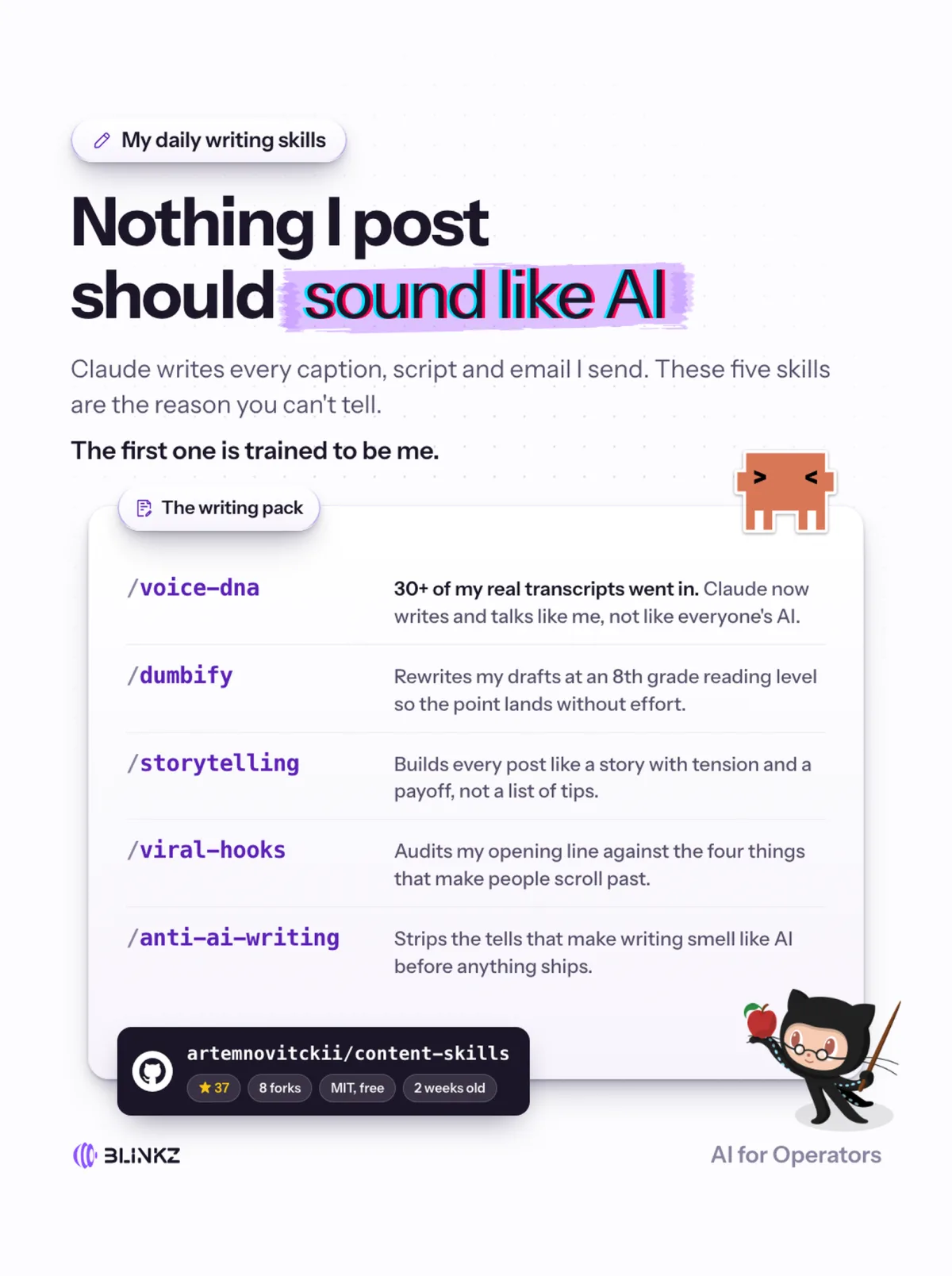
The writing pack
The rule inside this one is short. If a sentence sounds like a press release, it gets deleted.
That sounds like a style preference until you watch what it removes. Words that make a claim sound impressive without saying how. Sentences that knock down a fake idea to sound insightful. The tell is always the same: the writer did not have a point yet, so the sentence performed instead of saying something.
The pack is a filter, not a ghostwriter. It cannot make us interesting. It can stop us from shipping the beige version of an interesting thing.
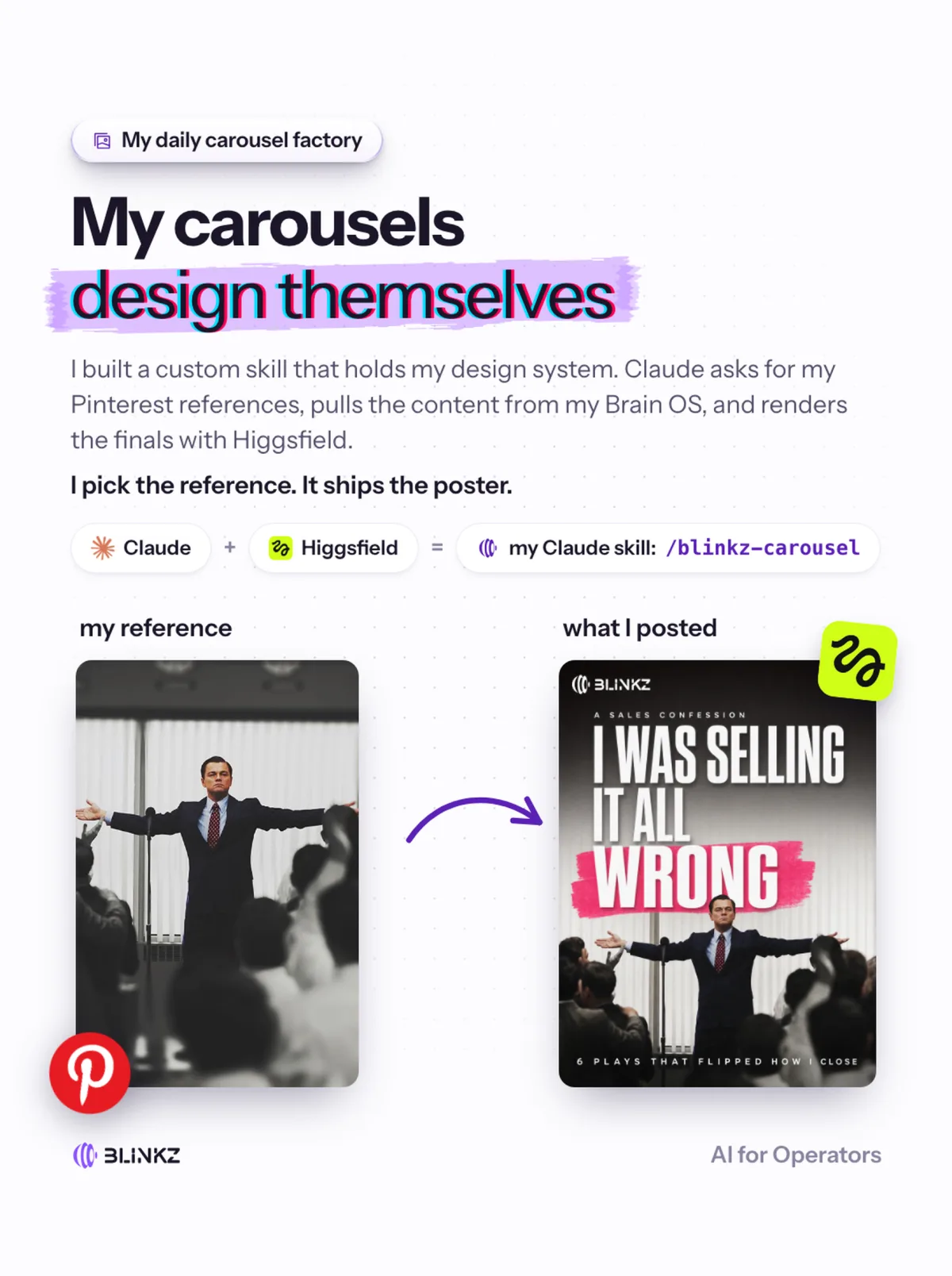
The carousel factory
The carousel at the top of this post went through it. We handed Claude a reference and it designed every slide on our own live design system.
This is the one that surprised people most, and it is worth being precise about why it works. It does not invent a look each time. It builds against the same tokens, cards, and type scale the website uses, so the output cannot drift into generic AI slop. The constraint is what makes it good.
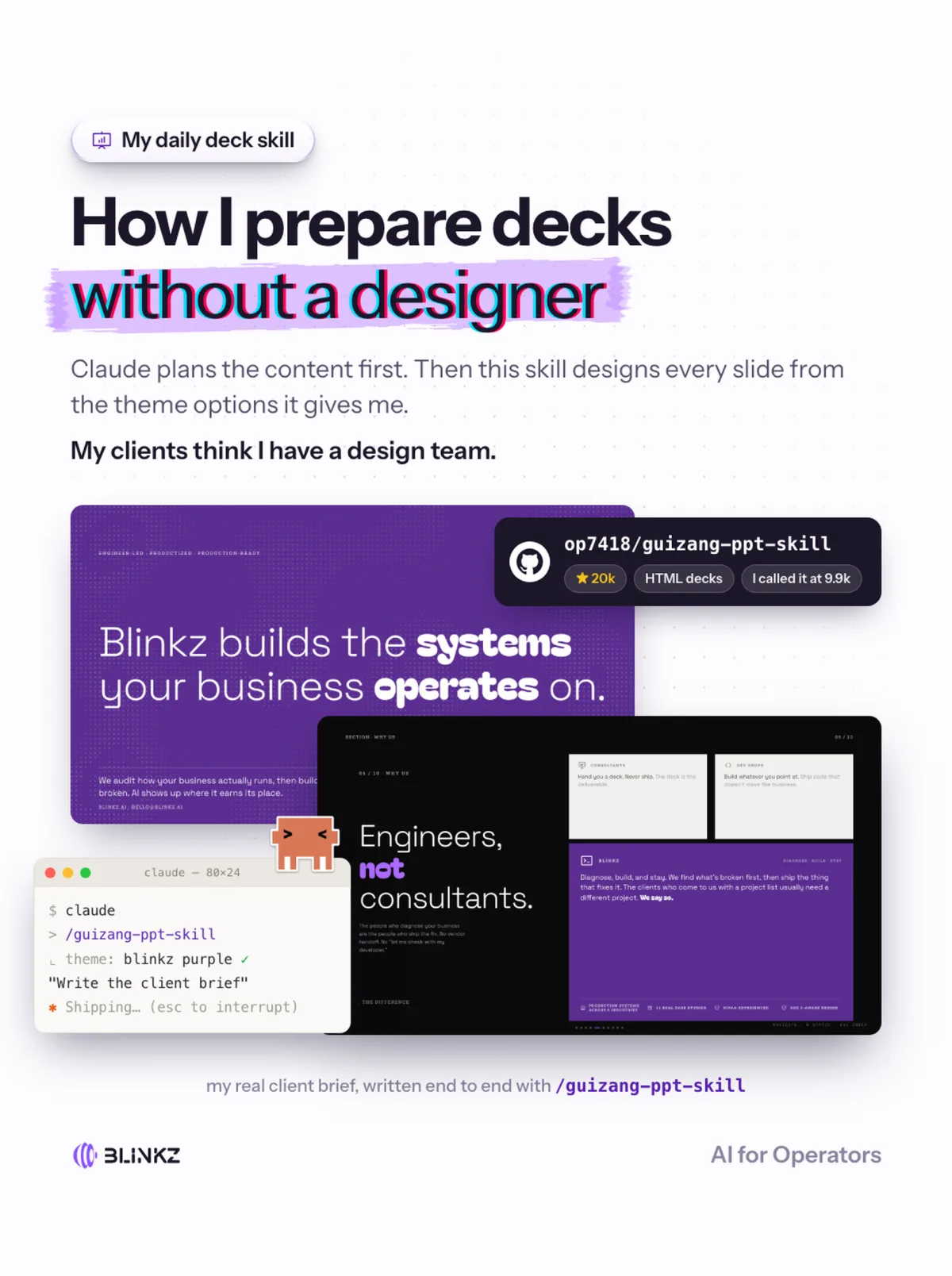
The deck skill
The repo behind this one sits at around 20,000 stars. We started using it when it was at 9,900.
That gap is the whole point of reading the open-source world every week, which is a habit we keep for the same reason we run audits: the useful thing is usually already in the room, just not where everyone is looking yet. We wrote up more of that pattern in six open-source agents that show where this is heading.
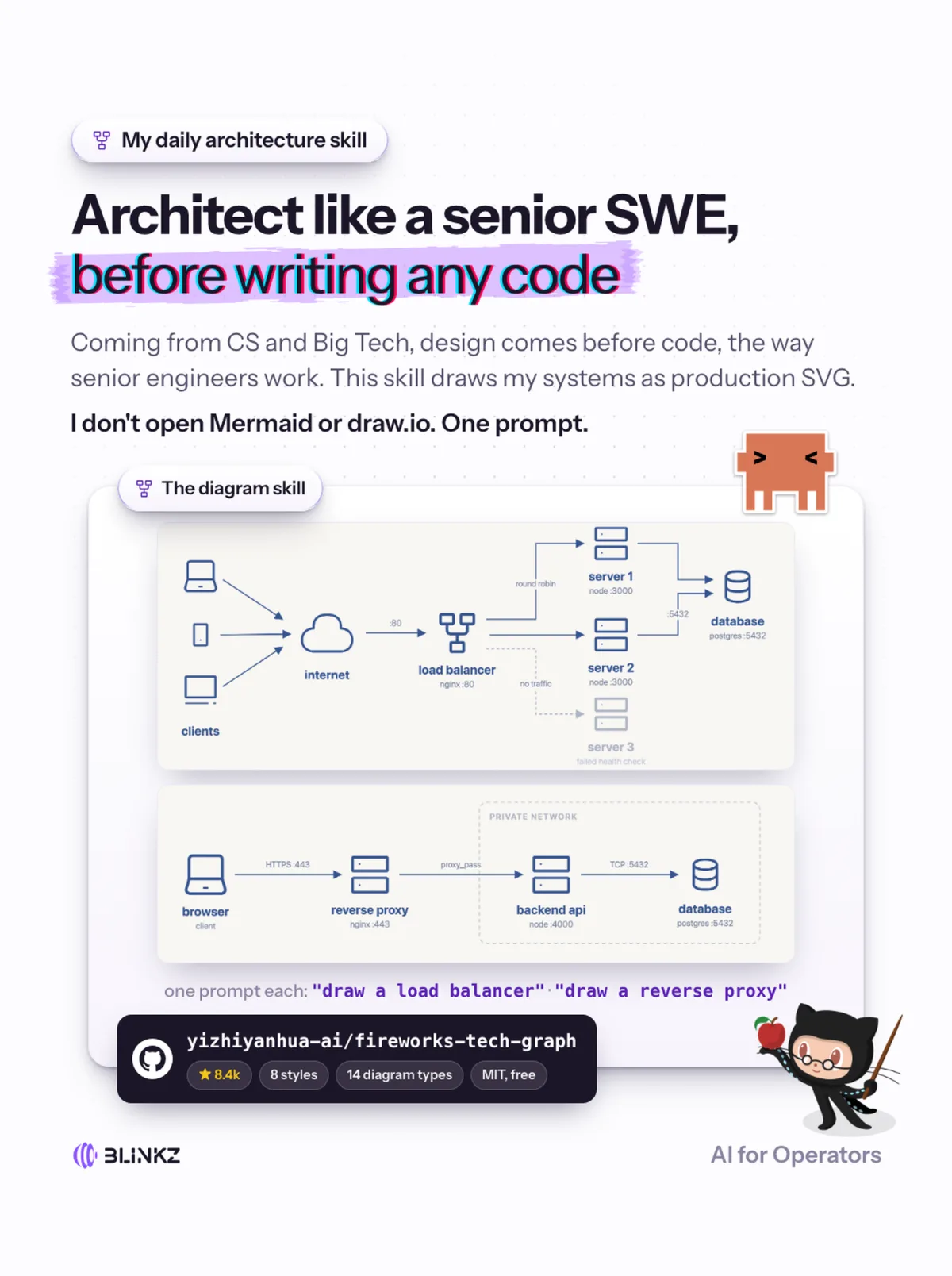
The architect
We are engineers by training, so we still draw the whole system before writing any code.
Claude is genuinely good at this, and it is the step most people skip. Skipping it is how you end up with a working demo that nobody can change six weeks later. We have written about what that failure actually looks like in the six ways vibe-coded apps break.
The pattern under all five
None of these five is a general-purpose assistant. Each one picked a narrow job and got trusted with it, which is exactly what we go looking for inside a business: the one place AI earns its keep. That is the argument behind where AI actually pays.
If you want the folder that makes the rest of it work, start with the free Brain OS kit. If you would rather we find the one place AI would pay in your business instead of your reading a tool list, that is the entire job of the free Health Check, and the systems we build follow the same rule these five do.
There are five more in part two.