Walk into most companies that "added AI" last year and you find the same thing the failed builds had: spend with nothing to show for it. A subscription nobody renews on purpose. A tool that impressed everyone in the demo and changed nothing in the actual work.
The money did not get wasted because the AI was weak. It got wasted because it was pointed at the wrong work.







The five places AI earns its keep
When AI pays, it is almost always doing one of five jobs:
- Answering questions about your own business. Point it at the scattered docs, sheets, and chat threads where the answers already live, and ask in plain English. You stop being the human search engine your team pings all day.
- Writing the process down once. Record a task a single time and AI turns it into the step-by-step guide. The how stops walking out the door every time someone leaves.
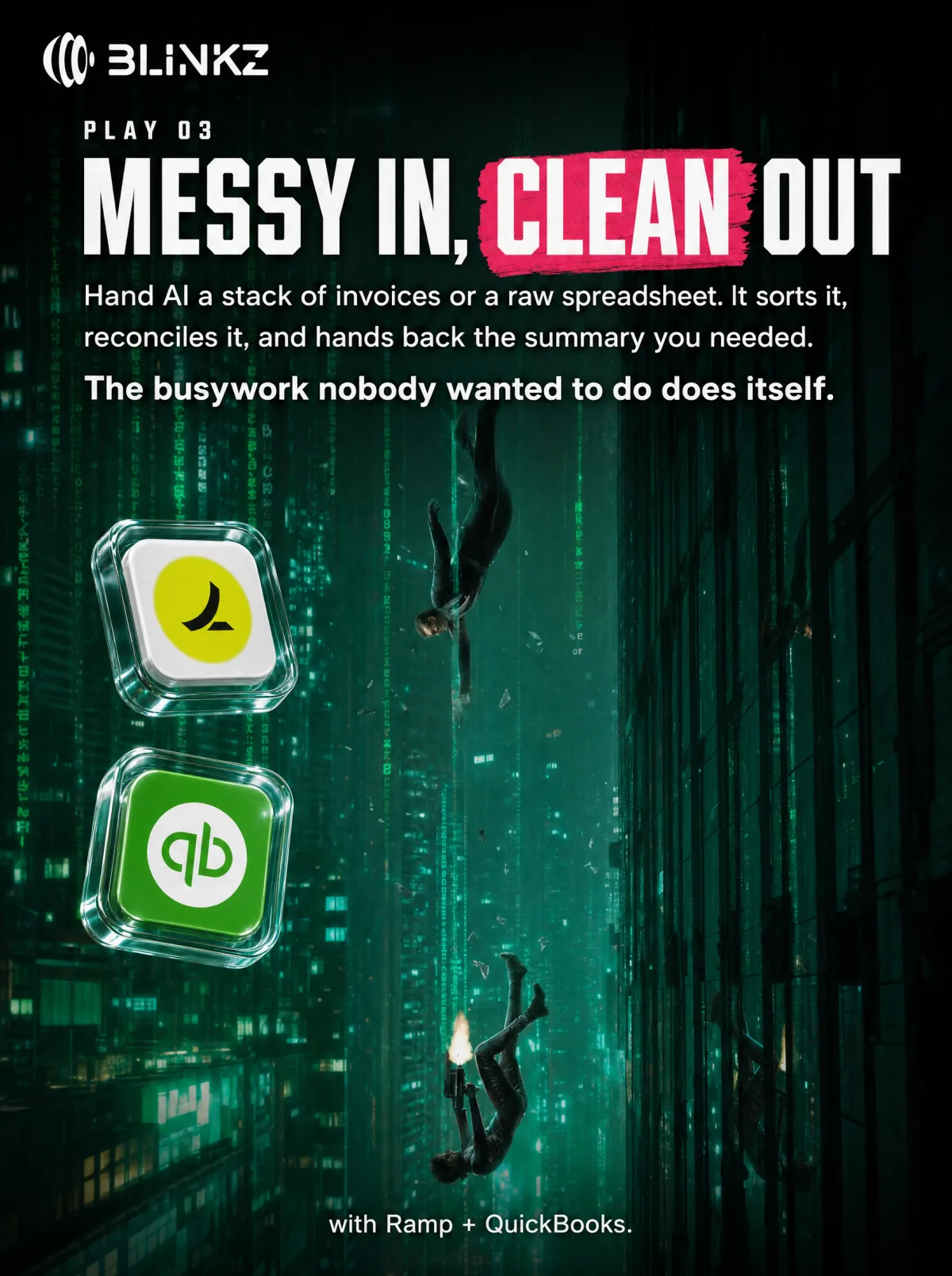
- Cleaning up the mess. Hand it a stack of invoices or a raw export and it sorts, reconciles, and hands back the summary. The busywork does itself.
- Moving work along on its own. The weekly update writes itself, requests route themselves, the meeting ends and the tasks are already on the board. You stop being the human reminder.
- Watching the numbers. It learns what a normal week looks like and flags what breaks the pattern, before it turns into a bad month.
Notice what these have in common. Every one is high-volume, low-judgment work: the same thing over and over, where the rule is clear and only the inputs change. That is exactly what a machine is good at.
Where it turns into a money pit
The waste lives in the opposite places:
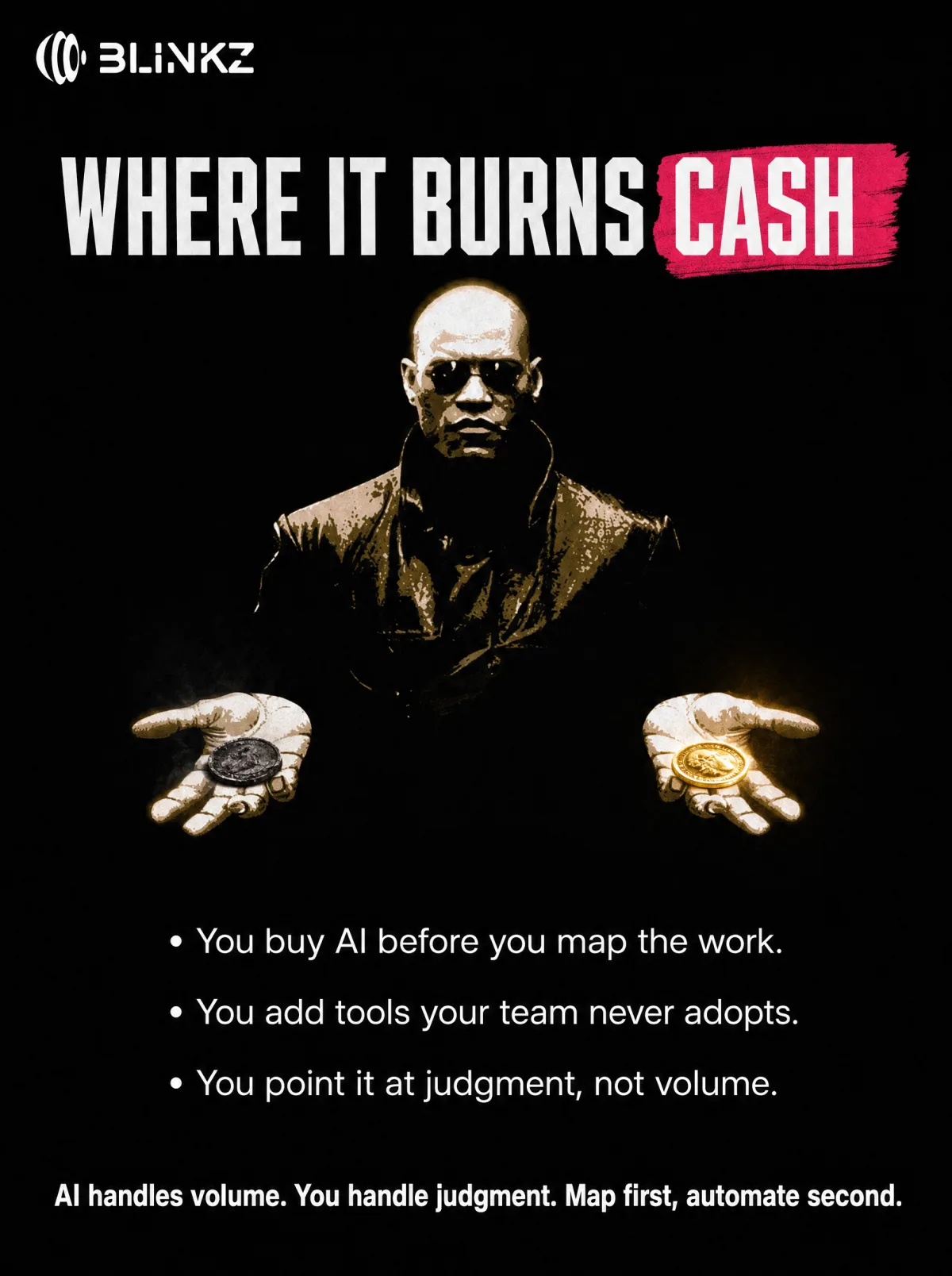
- Buying AI before anyone has mapped how the work actually flows. You just automate a broken process faster.
- Tools nobody adopts. A login is not a result.
- Pointing AI at judgment instead of volume. The call that needs taste, context, or a relationship is yours, not the model's.
The fix is not more AI
It is knowing where to put it. Map how your business actually runs, find the high-volume work eating hours, and point AI there. Let it handle the volume. You keep the judgment.
That mapping is the entire job of an operations audit. Most of our builds started right there. Not "what AI can we add," but "where is the time actually going, and which part of it should a machine have been doing months ago."