Is an AI-built website good enough to launch?
It works technically: the forms submit and the buttons route. What it usually lacks is human judgment on copy, layout and detail, which is what makes a first-time visitor trust the business
GPT or Claude will build you a website in a minute. The problem is that it won't pass the vibe check
One or two lines per step, and a prompt that makes Claude or Cursor wait until step eight
AI can build a working website in a minute, but working is not the same as trusted. The copy reads like nobody, the layout looks like a component demo, and the details are held together with hope. A founder's time is better spent on growth, with a team that ships something a stranger trusts on first visit.
It works technically: the forms submit and the buttons route. What it usually lacks is human judgment on copy, layout and detail, which is what makes a first-time visitor trust the business
For an MVP, sure. As the way you grow, no. Your time goes further on strategy, distribution and the people you are trying to reach
The reel is on Instagram. Here's the longer version.
Every day, GPT and Claude aren't really getting smarter about design. They're just adding more features to make "build me a website" accessible to anyone. And anyone is using them.
But here's what these tools don't really focus on. Should the general public actually be the ones shipping the public-facing surface of their business? And if they are, how do they ship something that passes the vibe check, not through their own eyes, but through the eyes of someone landing on the page for the first time?
The reason a lot of early founders don't see this gap is because all they care about is that they had an idea and they want it live. So with AI doing the heavy lifting, they jump straight in, put on the engineer cap, actually not even engineer, I'd say the developer cap, and start building.
Then they fall into this rabbit hole where they're working with code and components they've never really learned from day one. Suddenly they're touching backend, frontend, deployment, all of it, and feeling like they own the whole stack. That's fine for an MVP. It isn't fine as the way you actually grow.
And the website is usually where the cracks show first.
What gets shipped works, technically. The forms submit. The buttons route. But the copy reads like nobody. The layout feels like a component-library demo. The micro-interactions are held together with hope. Functional, sure. Slop, in practice. That's what AI gives you when you let it design and build at the same time, with no human judgment in between.
You, as the founder, should be focused on the growth of your idea, strategy, distribution, the people you're trying to reach. You can still be part of the technical layer. You just don't want that to become your bread and butter day and night, where you're tweaking layouts forever and never actually getting in front of anyone. Because at the end of the day, the website is doing the same job sales does, it's the first conversation. And if it sounds like a robot wrote it, you've already lost.
That's how products fail.
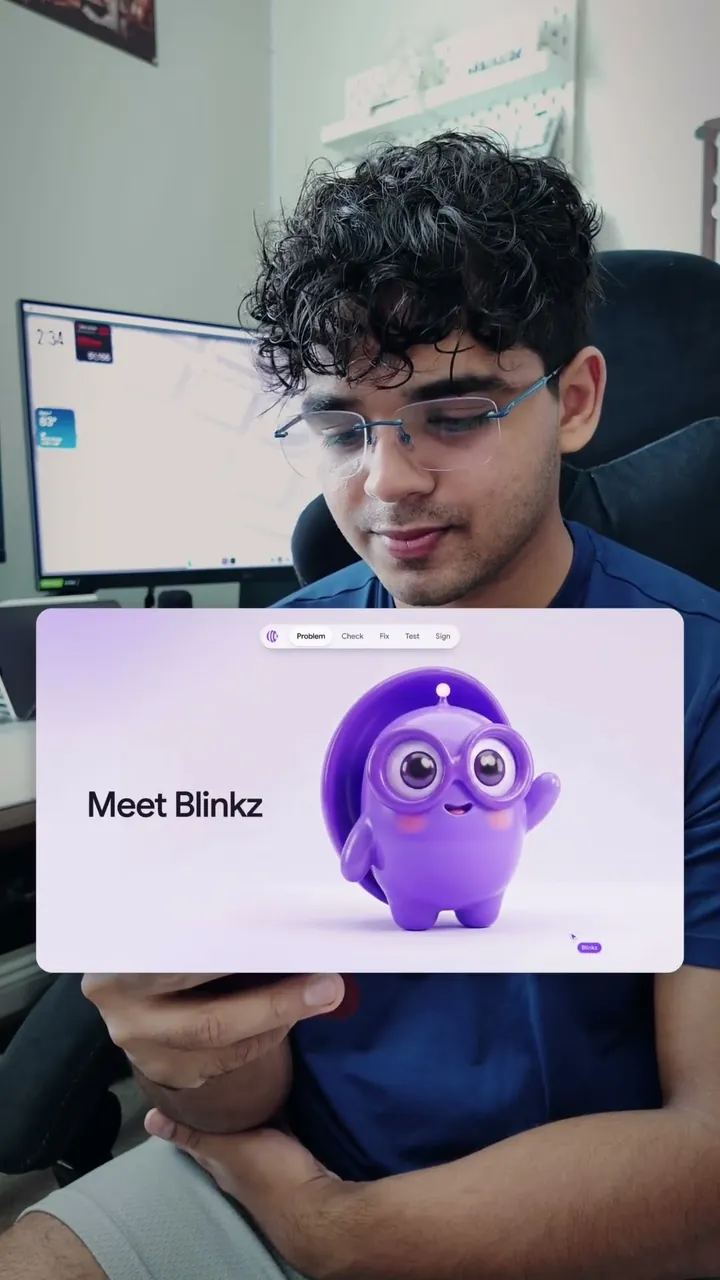
That's why at Blinkz, we want you to understand that we care about the focus and growth of your idea first. We care about that. And while we care about that, we have a technical and design team that ships you something that doesn't just "work." It passes the vibe check. It earns the scroll. It turns the visit into a message in your inbox. Not just functional. Production-ready. The first thing a stranger trusts about your business :)
One or two lines per step, and a prompt that makes Claude or Cursor wait until step eight
You’ll leave the call knowing what’s risky and what to do next